NEEM TREE
Azadirachta indica
(NEEM TREE )
Azadirachta indica, commonly known as neem, nimtree or Indian lilac is a tree in the mahogany family Meliaceae. It is one of two species in the genus Azadirachta, and is native to the Indian subcontinent, i.e. India, Nepal, Pakistan, Bangladesh, Sri Lanka . It is typically grown in tropical and semi-tropical regions. Neem trees also grow in islands located in the southern part of Iran. Its fruits and seeds are the source of neem oil

Neem leaf is used for leprosy, eye disorders, bloody nose, intestinal worms,stomach upset, loss of appetite, skin ulcers, diseases of the heart and blood vessels (cardiovascular disease), fever, diabetes, gum disease (gingivitis), and liver problems. The leaf is also used for birth control and to cause abortions.
The bark is used for malaria, stomach and intestinal ulcers, skin diseases, pain, and fever.
The flower is used for reducing bile, controlling phlegm, and treating intestinal worms.
The fruit is used for hemorrhoids, intestinal worms, urinary tract disorders, bloody nose, phlegm, eye disorders, diabetes, wounds, and leprosy.
Neem twigs are used for cough, asthma, hemorrhoids, intestinal worms, low sperm levels, urinary disorders, and diabetes. People in the tropics sometimes chew neem twigs instead of using toothbrushes, but this can cause illness; neem twigs are often contaminated with fungi within 2 weeks of harvest and should be avoided.
The seed and seed oil are used for leprosy and intestinal worms. They are also used for birth control and to cause abortions.
The stem, root bark, and fruit are used as a tonic and astringent.
Some people apply neem directly to the skin to treat head lice, skin diseases, wounds, and skin ulcers; as a mosquito repellent; and as a skin softener.
Inside the vagina, neem is used for birth control.
Neem is also used as an insecticide.
Neem is a fast-growing tree that can reach a height of 15–20 metres (49–66 ft), and rarely 35–40 metres (115–131 ft). It is evergreen, but in severe drought it may shed most of its leaves or nearly all leaves. The branches are wide and spreading. The fairly dense crown is roundish and may reach a diameter of 15–20 metres (49–66 ft) in old, free-standing specimens. The neem tree is very similar in appearance to its relative, the Chinaberry (Melia azedarach).
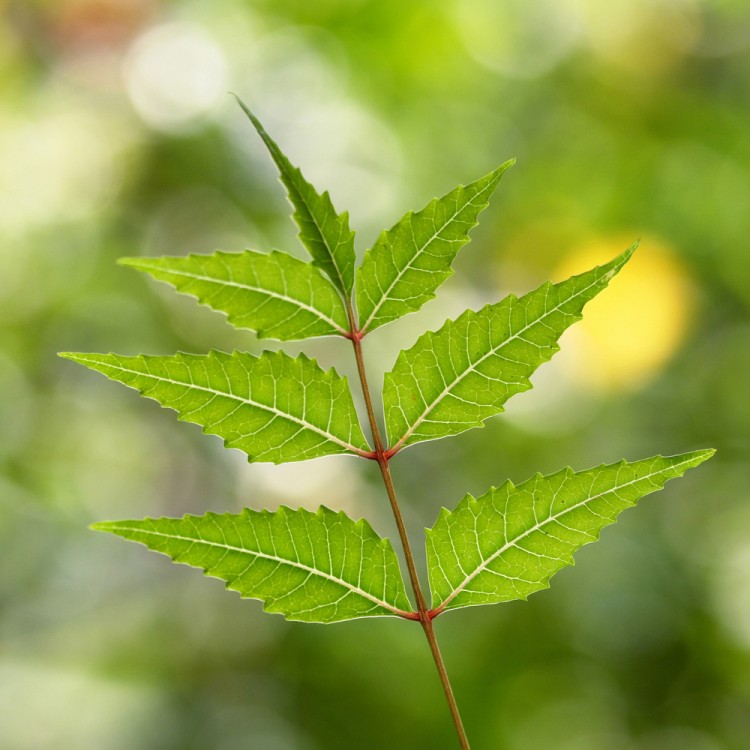
The opposite, pinnate leaves are 20–40 centimetres (7.9–15.7 in) long, with 20 to 31 medium to dark green leaflets about 3–8 centimetres (1.2–3.1 in) long. The terminal leaflet often is missing. The petioles are short.
The (white and fragrant) flowers are arranged in more-or-less drooping axillary panicles which are up to 25 centimetres (9.8 in) long. The inflorescences, which branch up to the third degree, bear from 150 to 250 flowers. An individual flower is 5–6 millimetres (0.20–0.24 in) long and 8–11 millimetres (0.31–0.43 in) wide. Protandrous, bisexual flowers and male flowers exist on the same individual tree.
The fruit is a smooth (glabrous), olive-like drupe which varies in shape from elongate oval to nearly roundish, and when ripe is 1.4–2.8 centimetres (0.55–1.10 in) by 1.0–1.5 centimetres (0.39–0.59 in). The fruit skin (exocarp) is thin and the bitter-sweet pulp (mesocarp) is yellowish-white and very fibrous. The mesocarp is 0.3–0.5 centimetres (0.12–0.20 in) thick. The white, hard inner shell (endocarp) of the fruit encloses one, rarely two, or three, elongated seeds (kernels) having a brown seed coat.
Neem tree is often confused with a similar looking tree called Bakain. Bakain also has toothed leaflets and similar looking fruit. The only distinction is Neem leaves are 1- Pinnate while Bakain leaves are 2- and 3 Pinnate. Its fruit are shaped like miniature apples.
Other uses

- Toiletries: Neem oil is used for preparing cosmetics such as soap, shampoo, balms, and creams as well as toothpaste
- Animal Treatment: Used to treat sweet itch and mud fever in horses
- Toothbrush: Traditionally, slender neem twigs (called datun) are first chewed as a toothbrush and then split as a tongue cleaner.This practice has been in use in India, Africa, and the Middle East for centuries. It is still used in India's rural areas. Neem twigs are still collected and sold in rural markets for this use. It has been found to be as effective as a toothbrush in reducing plaque and gingival inflammation.
- Tree: Besides its use in traditional Indian medicine, the neem tree is of great importance for its anti-desertification properties and possibly as a good carbon dioxide sink.
- Neem gum is used as a bulking agent and for the preparation of special purpose foods.
- Neem blossoms are used in Andhra Pradesh, Tamil Nadu, and Karnataka to prepare Ugadi pachhadi. A mixture of neem flowers and jaggery (or unrefined brown sugar) is prepared and offered to friends and relatives, symbolic of sweet and bitter events in the upcoming new year, Ugadi. "Bevina hoovina gojju" (a type of curry prepared with neem blossoms) is common in Karnataka throughout the year. Dried blossoms are used when fresh blossoms are not available. In Tamil Nadu, a rasam (veppam poo rasam) made with neem blossoms is a culinary specialty.
- Cosmetics: Neem is perceived in India as a beauty aid. Powdered leaves are a major component of at least one widely used facial cream. Purified neem oil is also used in nail polish and other cosmetics.
- Bird repellent: Neem leaf boiled in water can be used as a very cost-effective bird repellent, especially for sparrows.
- Lubricant: Neem oil is non-drying and it resists degradation better than most vegetable oils. In rural India, it is commonly used to grease cart wheels.
- Fertilizer: Neem extract is added to fertilizers (urea) as a nitrification inhibitor.
- Plant protectant: Ploughed into the soil, it protects plant roots from nematodes and white ants, probably as it contains the residua llimonoids. In Karnataka, people grow the tree mainly for its green leaves and twigs, which they puddle into flooded rice fields before the rice seedlings are transplanted.
- Resin: An exudate can be tapped from the trunk by wounding the bark. This high protein material is not a substitute for polysaccharidegum, such as gum arabic. It may, however, have a potential as a food additive, and it is widely used in South Asia as "Neem glue".
- Bark: Neem bark contains 14% tannin, an amount similar to that in conventional tannin-yielding trees (such as Acacia decurrens). Moreover, it yields a strong, coarse fibre commonly woven into ropes in the villages of India.
- Honey: In parts of Asia neem honey commands premium prices, and people promote apiculture by planting neem trees.
- Soap: 80% of India's supply of neem oil now is used by neem oil soap manufacturers. Although much of it goes to small-scale speciality soaps, often using cold-pressed oil, large-scale producers also use it, mainly because it is cheap. Additionally it is antibacterial and antifungal, soothing, and moisturising. It can be made with up to 40% neem oil. Generally, the crude oil is used to produce coarse laundry soaps.
- Against pox viruses: In India, people who are affected with pox viruses are generally made to lie in a bed made of neem leaves and branches.The belief is that it prevents the spreading of pox virus to others and has been in practice since early centuries.
- Animal feed: Neem leaves can be occasionally used as forage for ruminants and rabbits
Oil – Familiar primarily to organic gardeners in the United States, neem oil is made by pressing the oil-rich neem seeds. The oil is highly effective against a variety of pests, including:
Aphids
Mealybugs
Fungus gnats
Whiteflies
It is also useful as a natural insect repellent and is often incorporated into shampoo, soap, lotion and other skin care products. Additionally, the oil makes a great fungicide for issues like powdery mildew, black spot and sooty mold.
Bark – Neem bark isn’t widely used, although its anti-inflammatory and antiseptic properties make it a useful treatment for gum disease in mouthwash form. Traditionally, natives chewed the twigs, which served as effective, impromptu toothbrushes. The sticky bark resin is commonly used as glue.
Bark – Neem bark isn’t widely used, although its anti-inflammatory and antiseptic properties make it a useful treatment for gum disease in mouthwash form. Traditionally, natives chewed the twigs, which served as effective, impromptu toothbrushes. The sticky bark resin is commonly used as glue.
Flowers – Neem tree is widely appreciated for its sweet aroma, which honeybees love. The oil is also valued for its calming effect.
Wood – Neem is a fast-growing tree that tolerates poor growing conditions and drought-prone soil. As a result, the wood is a critical source of clean-burning firewood in many frost-free regions of the world.
Leaves – In paste form, neem leaves are used as a skin treatment, primarily for fungus, warts or chicken pox.
Leaves – In paste form, neem leaves are used as a skin treatment, primarily for fungus, warts or chicken pox.
Side Effects & Safety
Neem is POSSIBLY SAFE for most adults when taken by mouth for up to 10 weeks, when applied inside the mouth for up to 6 weeks, or when applied to the skin for up to 2 weeks. When neem is taken in large doses or for long periods of time, it isPOSSIBLY UNSAFE. It might harm the kidneys and liver.
Special Precautions & Warnings:
Children: Taking neem seeds or oil by mouth is LIKELY UNSAFE for children. Serious side effects in infants and small children can happen within hours after taking neem oil. These serious side effects include vomiting, diarrhea, drowsiness, blood disorders, seizures, loss of consciousness, coma, brain disorders, and death.
Pregnancy and breast-feeding: Neem oil and neem bark are LIKELY UNSAFE when taken by mouth during pregnancy. They can cause a miscarriage.
Not enough is known about the safety of need during breast-feeding. Stay on the safe side and avoid use.
“Auto-immune diseases” such as multiple sclerosis (MS), lupus (systemic lupus erythematosus, SLE), rheumatoid arthritis (RA), or other conditions: Neem might cause the immune system to become more active. This could increase the symptoms of auto-immune diseases. If you have one of these conditions, it’s best to avoid using neem.
Diabetes: There is some evidence that neem can lower blood sugar levels and might cause blood sugar to go too low. If you have diabetes and use neem, monitor your blood sugar carefully. It might be necessary to change the dose of your diabetes medication.
Reduced ability to have children (infertility): There is some evidence that neem can harm sperm. It might also reduce fertility in other ways. If you are trying to have children, avoid using neem.
Organ transplant: There is a concern that neem might decrease the effectiveness of medications that are used to prevent organ rejection. Do not use neem if you have had an organ transplant.
Surgery: Neem might lower blood sugar levels. There is a concern that it might interfere with blood sugar control during and after surgery. Stop using neem at least 2 weeks before a scheduled surgery.
Pregnancy and breast-feeding: Neem oil and neem bark are LIKELY UNSAFE when taken by mouth during pregnancy. They can cause a miscarriage.
Not enough is known about the safety of need during breast-feeding. Stay on the safe side and avoid use.
“Auto-immune diseases” such as multiple sclerosis (MS), lupus (systemic lupus erythematosus, SLE), rheumatoid arthritis (RA), or other conditions: Neem might cause the immune system to become more active. This could increase the symptoms of auto-immune diseases. If you have one of these conditions, it’s best to avoid using neem.
Diabetes: There is some evidence that neem can lower blood sugar levels and might cause blood sugar to go too low. If you have diabetes and use neem, monitor your blood sugar carefully. It might be necessary to change the dose of your diabetes medication.
Reduced ability to have children (infertility): There is some evidence that neem can harm sperm. It might also reduce fertility in other ways. If you are trying to have children, avoid using neem.
Organ transplant: There is a concern that neem might decrease the effectiveness of medications that are used to prevent organ rejection. Do not use neem if you have had an organ transplant.
Surgery: Neem might lower blood sugar levels. There is a concern that it might interfere with blood sugar control during and after surgery. Stop using neem at least 2 weeks before a scheduled surgery.
Moderate Interaction
Be cautious with this combination
- Lithium interacts with NEEMNeem might have an effect like a water pill or "diuretic." Taking neem might decrease how well the body gets rid of lithium. This could increase how much lithium is in the body and result in serious side effects. Talk with your healthcare provider before using this product if you are taking lithium. Your lithium dose might need to be changed.
- Medications for diabetes (Antidiabetes drugs) interacts with NEEMNeem might decrease blood sugar. Diabetes medications are also used to lower blood sugar. Taking neem along with diabetes medications might cause your blood sugar to go too low. Monitor your blood sugar closely. The dose of your diabetes medication might need to be changed.<br/><br/> Some medications used for diabetes include glimepiride (Amaryl), glyburide (DiaBeta, Glynase PresTab, Micronase), insulin, pioglitazone (Actos), rosiglitazone (Avandia), chlorpropamide (Diabinese), glipizide (Glucotrol), tolbutamide (Orinase), and others.
- Medications that decrease the immune system (Immunosuppressants) interacts with NEEMNeem might increase the immune system. By increasing the immune system, neem might decrease the effectiveness of medications that decrease the immune system.<br/><br/> Some medications that decrease the immune system include azathioprine (Imuran), basiliximab (Simulect), cyclosporine (Neoral, Sandimmune), daclizumab (Zenapax), muromonab-CD3 (OKT3, Orthoclone OKT3), mycophenolate (CellCept), tacrolimus (FK506, Prograf), sirolimus (Rapamune), prednisone (Deltasone, Orasone), corticosteroids (glucocorticoids), and others.
Neem oil is a vegetable oil pressed from the fruits and seeds of the neem (Azadirachta indica), an evergreen tree which is endemic to the Indian subcontinent and has been introduced to many other areas in the tropics. It is the most important of the commercially available products of neem for organic farming and medicines
uses
It's antibacterial and anti-fungal properties help to heal small cuts and wounds, alleviate acne symptoms and fight skin-related fungal infections. No wonder manufacturers take advantage of the benefits of neem oil and use it in the manufacturing of skin care products such as lotions, creams, soaps and even cosmetics!




uses
It's antibacterial and anti-fungal properties help to heal small cuts and wounds, alleviate acne symptoms and fight skin-related fungal infections. No wonder manufacturers take advantage of the benefits of neem oil and use it in the manufacturing of skin care products such as lotions, creams, soaps and even cosmetics!
NOW LET'S EXPLORE THE TOP 20 AMAZING BENEFITS OF NEEM OIL:
There are costly branded hair oils that use neem leaf extract, but you'll find that you can get the exact same results with neem oil for hair and scalp care. Neem oil can improve all hair conditions from dry, thinning, frizzy hair to helping with hair loss, promoting hair growth and getting rid of lice. In fact if you've tried everything and nothing seems to work, you must give neem oil a try.
1. NEEM OIL FOR HAIR LOSS
It's important to maintain and take care of your hair so that you can prevent hair ailments such as hair loss, dry itchy scalp, premature graying, dandruff and more. Conditioning the hair with neem oil can do wonders for your hair health and prevent hair loss.
How to use neem oil for hair loss:
1. Add to shampoo: Add a few drops of neem oil to your shampoo. Let sit for 10 minutes and wash off. Use daily or every alternate day and see the difference!
2. Intensive scalp treatment: Combine 1 tsp. of neem oil to 2 tsp. of a carrier oil also beneficial for hair such as coconut oil, almond oil or Emu Oil (excellent for hair loss!). Leave over-night or at least for a few hours. Apply weekly to rejuvenate your scalp and get hair as smooth as silk.
2. NEEM OIL FOR DANDRUFF
Neem oil is commonly found in many anti-dandruff shampoos. Applying neem oil regularly can help scalp itching and dryness and being a natural anti-fungal and antibacterial, it can curb fungal and bacterial infections that can often cause or worsen dandruff. Neem oil also helps to restore the natural pH level of the scalp, important for dandruff control.
How to use neem oil for dandruff:
Scalp Treatment: Massage 2-3 tsp. of warm neem oil directly onto the scalp. Wash in 30 minutes. It is best to use the highest quality of neem oil such as cold-pressed neem oil for best results.
If you have a sensitive scalp combine neem oil with a carrier oil such as coconut or moringa oil (an excellent hair conditioner!).
3. NEEM OIL FOR DRY ITCHY SCALP
There's nothing more annoying than a dry, itchy scalp. Combining neem oil with powerful essential oils such as eucalyptus oil (an excellent anti-inflammatory), and peppermint oil (to provide soothing cooling relief) is a great way to nourish a dry scalp, curb itching and make your hair smell great!
How to use neem oil for dry itchy scalp:
Itch Relief: Combine 1 tsp. neem oil with 2-3 drops of eucalyptus oil, 2-3 drops of peppermint oil and 1 tbsp coconut or almond oil. Massage into the hair and scalp. Leave and wash after a few hours or leave overnight for best results.
4. NEEM OIL FOR FRIZZY HAIR
Does your hair seem to get frizzy during the monsoon season or when you're out on the beach? Neem oil is great for those who live in high humidity conditions and get rough, frizzy hair as a result. Increased moisture in the air makes the hair absorb water and swell. Neem oil is great for combating frizzy hair because it has hydrophobic properties and is a natural water repellent. It forms a thin coating on the hair protecting your hair from the environment.
How to use neem oil for frizzy hair:
Frizzy Hair Conditioner: Add a few drops of neem oil to 1 tsp. of a carrier oil such as coconut oil and massage into the scalp. You can also add a few drops of your favorite essential oil to curb the smell of neem oil such as peppermint oil, or tea tree oil (another excellent essential oil for hair and scalp health). This will give the hair a nice shine and protect it from the elements.
5. NEEM OIL FOR SPLIT ENDS
Split ends often happen when hair weakens and breaks at the end of the hair shaft. There can be many reasons why split ends occur such as harsh heat styling, damaging hair products, sunlight and more. If you suffer from split ends trimming your hair regularly is recommended. To control split ends apply a few drops of neem oil with a carrier oil like coconut oil to condition and moisturize the hair and make it more manageable.
6. NEEM OIL FOR LICE
If you have head lice, there's nothing more annoying. Neem oil contains the active ingredient azadirachtin, nature's all-natural insecticide. Many commercially available lice sprays contain neem as it is incredibly powerful in treating head lice but the downside is those sprays usually contain toxic chemicals which can do more harm than good. Lice hate the smell of neem oil, so this home remedy below is an excellent natural treatment you can do at home to get rid of lice once and for all.
How to use neem oil for lice:
Head lice treatment: Massage 6-7 tsp. of warm neem oil into the hair. Cover with a shower cap or towel and leave overnight. The next morning comb through hair with a fine nit comb, to catch the eggs. If itching continues, repeat.
NEEM OIL FOR SKIN
Neem oil is laden with natural nutrients that are extremely beneficial for those who have eczema, psoriasis and dry, itchy skin. It's antibacterial and anti-fungal properties help to heal small cuts and wounds, alleviate acne symptoms and fight skin-related fungal infections. No wonder manufacturers take advantage of the benefits of neem oil and use it in the manufacturing of skin care products such as lotions, creams, soaps and even cosmetics!
7. NEEM OIL FOR DRY SKIN
Being hydrophobic (a natural water repellent), neem oil is a highly effective skin conditioner and is excellent to use on areas of the skin that are exposed and washed frequently and tend to be more dry, such as the face, hands and feet. Neem oil creates a thin barrier on top of the skin and locks moisture in, leaving skin smooth and supple.
Neem oil is also rich in Vitamin E and Essential Fatty Acids (EFAs), and research suggests that, "Because of its EFAs and vitamin E, neem oil penetrates deep within the skin to heal the minute cracks brought on by severe dryness."
How to use neem oil for dry skin:
Moisturizing skin conditioner: Having a pungent odor, it is best to mix neem oil with a carrier oil such as coconut oil or tamanu oil (an excellent skin conditioner), and even add a few drops of your favorite essential oil to please the senses. Massage onto dry areas of your skin, especially the soles of the feet and cracked heels and feel the difference!
8. NEEM OIL FOR SKIN PIGMENTATION
Have pigmented skin? Neem oil is excellent at reducing skin pigmentation caused by an over-production of melanin (the pigment that gives human skin its color). Neem oil can help lighten areas of the skin by regulating the secretion of melanin, and when used regularly, it reduces skin pigmentation, making the skin fairer.
How to use neem oil for skin pigmentation:
Skin spot treatment: For small areas take a ear bud soaked in a few drops of neem oil and apply directly on the pigmented areas of the skin. Test for sensitivity on the inner side of your wrist before using on exposed areas such as the face and neck.
9. NEEM OIL FOR ECZEMA AND PSORIASIS
Both eczema and psoriasis are skin conditions that cannot be cured but only controlled. Neem oil can effectively control the inflammation and irritation caused by these conditions helping to alleviate redness, swelling and heal cuts, breaks and abrasions in the skin. Neem contains nimbidin & nimbin compounds, that have shown to have powerful anti-inflammatory properties.
Being rich in Vitamin E, neem oil creates a thin layer to protect the skin and reduce moisture loss and being a natural pain killer (analgesic), neem oil can provide immediate relieve from discomforting skin irritation. This can reduce itching and scratching and actually prevent further complications.
How to use neem oil for eczema and psoriasis:
1. Neem Bath: For eczema and other skin conditions it is best to use soap-free cleansers. Towards the end of your bath add some neem oil to your bath water (lukewarm only) and rinse your body. This will create a protective barrier on your skin locking in moisture and making the skin soft.
2. Neem Salve: For sensitive skin conditions, applying undiluted neem oil can actually irritate the skin more, so it is best to mix neem oil with a carrier oil such as jojoba oil or tamanu oil and massage lightly onto the affected areas.
10. NEEM OIL FOR ACNE
There's no doubt that using natural alternatives like neem oil and potent essential oils are far better than using chemically-ridden creams and face washes that can actually cause more irritation and dry out the skin, when it comes to treating acne. Neem oil hampers bacterial growth and being a natural anti-inflammatory it helps to reduce redness and swelling. Vitamin E in neem oil helps heal damaged skin, reducing acne related scarring.
How to use neem oil for acne:
Face Mask: Warm 1 tsp. of olive oil and add 10-12 drops of cold-pressed neem oil. Not all neem oils are created equal, some may be more refined and contain added solvents, so make sure the bottle mentions that it is 100% cold-pressed neem oil. Apply this blend on the face, especially on pimples and wash off in 1-2 hours. You can also add 1 drop of peppermint oil and 1 drop of eucalyptus oil(both natural anti-inflammatory and antiseptic agents) for best results.
11. NEEM OIL FOR FUNGAL INFECTIONS
Neem is a powerful anti-fungal, and contains active ingredients that are highly effective to treat topical fungal infections such as ring worm, toe and nail fungus and athletes foot. Research suggests that "extracts from neem leaves and seeds" are "sufficient to destroy" several strains of fungi.
How to use neem oil for fungal infections:
1. Apply Directly: Soak a ear bud with a few drops of neem oil and apply to the affected areas three times daily.
2. Nail infection Treatment: Blend 2-3 drops of oregano oil with the same amount of neem oil. Oregano oil is rich in thymol, a powerful agent with excellent anti-fungal properties. Apply on the infected nails and itchy skin between toenails. Repeat three times a day until the infection subsides.
12. NEEM OIL FOR ANTI-AGING AND SUN PROTECTION
Skin exposed to harsh ultraviolet (UV) rays of the sun can get inflamed and damaged. UV rays can penetrate skin layers and cause harm to the delicate collagen layer under the skin, that can cause the skin to age prematurely. But that's not all. UV exposure also causes a release of free radicals in the skin, which in worse cases can lead to skin cancer.
Even after wearing protective clothing, hats and applying sunscreen lotion to protect the skin, sun exposure can occur. When this happens neem oil's anti-inflammatory and analgesic action can help reduce redness and burning and the natural antioxidants in the oil can defend against free radicals protecting skin from further damage.
How to use neem oil for anti-aging and wrinkles:
Anti-wrinkle Oil: Combine a few drops of neem oil with moringa oil (Used for centuries as an anti-aging oil, it rejuvenates aging skin, improving the appearance of fine lines, wrinkles and sagging facial muscles). Apply on the face for a few hours and wash off or leave overnight to get the full benefits of neem oil.
NEEM OIL FOR TEETH AND GUMS
Neem twigs have been used in India for centuries as all-natural toothbrushes. Chewing on a neem twig (with the outer bark removed), can prevent gum disease, reduce tooth decay and also whiten your pearls. You may not have a neem tree in your backyard but having neem oil in your medicine cabinet can also work wonders for your teeth and gum health!
13. NEEM OIL FOR HEALTHY GUMS
Neem oil has natural anti-bacterial properties that make it excellent for bleeding gums and to use to prevent gum inflammation like gingivitis. Before brushing, simply massage 1-2 drops of neem oil mixed with a carrier oil such as coconut oil for healthy, strong gums and improved oral health. Brushing with a gentle toothpaste is recommended.
14. NEEM OIL FOR TEETH
There are many toothpastes and oral care products available in the market that contain neem as an active ingredient, and there's good reason why - it works! Neem oil helps in bacteria and plaque control and will keep your teeth strong and healthy.
How to use neem oil for teeth:
1. Add to Toothpaste: Add 2-3 drops of neem oil to a tiny amount of toothpaste on your brush. The neem oil will penetrate the gums and go in between the teeth reducing tooth decay. The taste of the toothpaste will also help curb the strong taste of neem oil.
2. Medicated Floss: Rub some neem oil on your floss before flossing. Again, this helps improve oral health as the antibacterial and medicinal properties of neem seep into your gums and teeth.
NEEM OIL FOR INSECTS AND PESTS
Commercial insecticides and pesticides are full of toxic chemicals that can often do more harm than good. If you're looking for a natural way to control insects, pests and disease, there's nothing better than neem oil.
According to ScienceDirect, neem is "a storehouse of insecticidal azadirachtin, which possess antifeedant, growth disrupting and larvicidal properties against an array of agricultural insect pests." In fact, azadirachtin is neem's most powerful active ingredient and one of nature's most potent insecticides. More importantly, neem is sustainable and environmentally-friendly unlike most synthetic alternatives.
15. NEEM OIL FOR PLANTS
Chemical pesticides and insecticides can leech into the environment and cause harm. Unlike its synthetic counterparts, neem oil is non-toxic and naturally degrades into the environment and does not cause harm to animals, birds, fish and other wildlife.
Neem oil, and particularly its active compound, azadirachtin, can kill insects at different stages, from the egg and larvae stage to full grown adult by disrupting their reproductive cycles. Neem oil works efficiently against over a hundred different insects like aphids, mites, white flies, beetles, ants, leaf miners, caterpillars and more. Also interestingly, neem oil only affects insects that suck or chew and does not harm beneficial bugs like earthworms, ladybugs, and bees.
How to use neem oil for plants:
How to use neem oil for plants:
Neem oil insecticide spray: In a 16oz. spray bottle filled with warm distilled water first add 1/2 a tbsp. of pure Castile soap (don't use detergents; Castile soap is easily found in natural food stores or online and is needed to dissolve the oil) and 1/2 a tsp. of cold-pressed neem oil (a little goes a long way) as this has a high level of azadirachtin. Shake to dissolve. Spray once a week for best results. To further enhance your insecticide add 10 drops of citronella essential oil, an all natural insect repellent, which will also make your garden smell great!
Note: Unlike chemical sprays that can have immediate but toxic effects, neem oil will not work overnight and will take a few days to show results. Be patient and the results will show!
16. NEEM OIL FOR POWDERY MILDEW
Powdery mildew is a fungal disease that affects many plants and especially roses. Affected plants look like they've received a dusting of flour. To control and remove powdery mildew from rose bushes and other plants, add 1/2 tsp. of apple cider vinegar to the neem oil insecticide spray above. Being a natural fungicide, research shows that neem oil is highly effective against the fungus. Spray once a week.
17. NEEM OIL FOR MOSQUITOES
Neem oil is a much safer alternative to using harsh insect repellents and pesticides that contain DEET, which have questionable health concerns.
When it comes to repelling mosquitoes, especially those carrying malaria, (a mosquito-borne and spread life threatening infectious disease), research shows that, "Two percent neem oil mixed in coconut oil, when applied to the exposed body parts of human volunteers, provided complete protection for 12 h from the bites of all anopheline species." The study concluded that the "application of neem oil is safe and can be used for protection from malaria in endemic countries."
When it comes to repelling mosquitoes, especially those carrying malaria, (a mosquito-borne and spread life threatening infectious disease), research shows that, "Two percent neem oil mixed in coconut oil, when applied to the exposed body parts of human volunteers, provided complete protection for 12 h from the bites of all anopheline species." The study concluded that the "application of neem oil is safe and can be used for protection from malaria in endemic countries."
18. NEEM OIL FOR BED BUGS
If you've ever had bed bugs, you know that there's nothing worse than your home being infested by these blood-sucking pests. The United States Environmental Protection Agency (EPA) has deemed that cold-pressed neem oil "is the only biochemical pesticide registered for use against bed bugs." In fact results have shown that neem oil can help control bed bug eggs, nymphs and adults.
How to use neem oil for bed bugs:
Bed Bug Spray: In a 16oz. spray bottle filled with water first add 1 tbsp. of pure Castile soap (easily available in natural food stores or online, and required to dissolve neem oil) and 4-5 tsp. of cold-pressed neem oil (The EPA recommends a 5.5% concentration level of neem oil for residential use). Shake to dissolve and add a few drops of an essential oil such as clove leaf essential oil, an effective bed bug repellent.
Spray your bed mattress, sheets, headboard, underneath the bed and small crevices where the annoying pests can hide. Use thrice a day for the first three days and then thrice a day, every alternate day, for at least 3 weeks to ensure you have eradicated the infestation.
NEEM OIL FOR PETS
The benefits of neem oil are not just limited to humans! When your dog or cat suffers from parasites and mites and you want to turn to a natural alternative rather than an off-the-counter toxic product, choose neem oil. Neem oil is a safe alternative to synthetic products and can be highly effective against mites, fleas and other parasites that can cause discomfort to your pet.
19. NEEM OIL FOR DOGS
Neem oil can help manage mites, fleas, parasitic infections, and even topical skin conditions like atopic dermatitis (an inflammatory skin condition caused by environmental allergens, that causes severe itching). Research shows that neem is "beneficial for dogs with atopic dermatitis," and can also manage mites and help with intestinal parasites, fleas and ticks.
How to use neem oil for dogs:
1. Tick spray: In a vessel combine 2 cups of warm water with 1/2 tsp. mild soap (such as Castile soap) and mix vigorously. Slowly add 1 tsp. of neem oil and stir continuously until dissolved. Fill in a spray bottle and use immediately on the affected areas.
2. Add to shampoo: For skin conditions and parasites, you can also add neem oil to the shampoo you use to bathe your dog. Add 1/2 tsp. to 1 tsp. of neem oil to 1/2 a cup of shampoo and use once every 2 weeks. Leave for 15-20 minutes and rinse off. For ticks follow with the tick spray recipe above.
THANK YOU


Simply ensure it doesn't raise you any ruckus prior to employing somebody to take care of your trees. Stump Grinding Huntington Beach
ReplyDelete